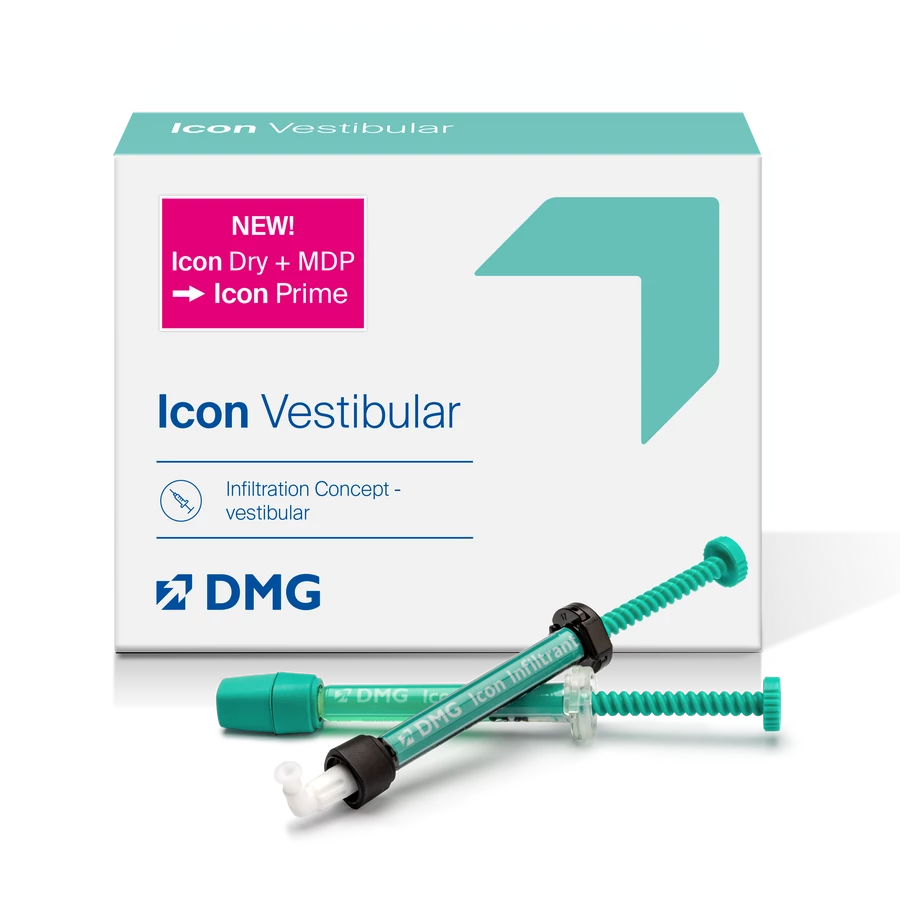
Icon Vestibular - DMG
-
There are many possible causes for discoloration of enamel surfaces.
Whether it is early-stage caries, fluorosis, or trauma, there is a simple and gentle treatment option: infiltration therapy using the Icon Vestibular product. This infiltration treatment, performed with a special highly fluid resin, was originally designed to halt early proximal caries without drilling. However, the innovative concept also makes it possible to achieve an aesthetic correction of discolorations on vestibular surfaces.

-
Manufacturer:

- Expected delivery: April 21, 2026
Product tabs
Description


PROVIDE RELIABLE TREATMENT FOR YOUR PATIENTS – WITHOUT EXCESS MATERIAL LOSS
Etching – Drying – Infiltration
1. Icon Etch
Etching is performed using a hydrochloric acid gel to prepare the affected tooth surface. This step removes the pseudo-intact surface layer, allowing the infiltrant to penetrate the porous enamel.
2. Icon Prime
The primer contains a functional monomer (MDP) that helps create a stronger and more durable micro-mechanical and chemical bond between the tooth substance and the infiltrating resin.
- Improves surface wettability and adhesion, allowing the infiltrant to penetrate deeper and more evenly into the demineralized enamel.
- Penetration can increase by 30–50%, giving more precise control, better clinical outcomes, and longer-lasting aesthetic results, especially for complex or deeply porous lesions.
Typical use: Applied after etching to prepare the tooth surface for infiltration. After application, the treated lesion provides information about accessibility to the infiltrant and can help anticipate final color. The whitish appearance of the lesion disappears within seconds after surface wetting.
3. Icon Infiltrant
(Methacrylate-based resin infiltrant matrix)
A low-viscosity resin is applied to the prepared surface, penetrating the deeper enamel layers and filling the lesion. The infiltrant is a light-curable methacrylate-based resin matrix.
Key advantages:
- The infiltrated lesion achieves mechanical and optical properties similar to the surrounding healthy enamel.
- The resin reduces light scattering between enamel crystals, improving aesthetic integration.
Necessary Complement: Whitening
Patients with severe fluorosis can be effectively treated with infiltration, usually in combination with other procedures such as whitening, microabrasion, or composite restorations.
- Icon infiltration cannot remove yellow or brown discoloration, so for severe fluorosis, whitening is generally performed prior to infiltration.
- Professional cleaning before treatment is recommended to remove surface stains and substances that could interfere with whitening.
- Assessing and managing dentin sensitivity is essential, as many MIH patients already experience discomfort due to mottled enamel.
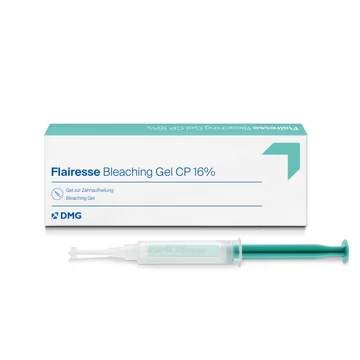
 Home whitening is recommended over in-office treatments for younger patients:
- In-office gels: 6–35% hydrogen peroxide
- Home gels: 5–16% carbamide peroxide (equivalent to 1.8–6% actual hydrogen peroxide)
- Home whitening reduces the risk of sensitivity and is safer for young patients.
While whitening primarily removes yellow or brown stains, it can also help mask white spots by lightening the surrounding enamel. Note: White spots may initially appear more pronounced or mottled due to dehydration and demineralization; these changes are temporary and resolve as the enamel rehydrates and remineralizes.
Icon Step-by-Step Use
Attached documents
Related products